- The AI Operator
- Posts
- Titles Are Fiction. Outcomes Are Real.
Titles Are Fiction. Outcomes Are Real.
We are helping US companies hire close to 100 GTM and AI Operators every month. The same mistake keeps killing the hire before it starts.

Amir Reiter
April 17, 2026
Last week I told you the rep-to-operator shift is real and the window is open.
This week I have to tell you the second half of the story.
Most companies hiring into this shift are burning the hire before day one.
We see it every week.
Same pattern. Different logos.
The two requests we get every week
"I want a GTM leader who can cold call."
"I want an AI Operator who can build me a CRM to replace HubSpot in Lovable."
These are not roles. They are wishes stitched together from LinkedIn posts.
Titles come and go. Outcomes do not.
If you cannot write the 90-day outcome you need from this hire, you do not have a role.
You have a vibe.
Write this before you post the job:
The specific outcome the hire owns in their first 90 days.
The three systems they will be responsible for by day 30.
The metric on which you will fire or promote them by day 90.
If any of those three is missing, pause.
You are not ready to hire. You are ready to experiment.
Those are different budgets.
Do not hire full-time to run an experiment
If you want to test whether voice AI works for your inbound, run a 60-day paid pilot with a consultant or a fractional operator.
Do not put a full-time salary behind a hypothesis you have not tested.
You will either fire them in 90 days or try to promote them into a role that does not exist yet.
Both outcomes cost money!
Know the market before you write the salary
Here is what 10,000 LATAM placements over 10 years tells us about what money actually buys.

The 75 percent trap
If your only goal is 75 percent savings off a US salary, you are not hiring.
You are buying a 90-day placeholder.
Invest correctly or do not invest.
A half-commit churns and costs you the replacement, the onboarding time, and the opportunity cost of an empty seat.
50 percent savings gets you an operator who stays 24 months and longer.
That is the math that compounds.
Build the onboarding and PIP before the first interview
We see it every month. Buyer hires. Buyer has no written onboarding plan. Hire floats for 60 days. Buyer starts to resent the hire in week 8. Hire starts to job-hunt in week 10.
By day 90 both sides are done.
Nobody ran the PIP because there was no standard to measure against in the first place.
Three documents must exist before the job post goes live:
Scorecard. What does good look like on days 30, 60, and 90?
Onboarding plan. Week-by-week, what do they learn, build, and produce?
PIP framework. What triggers it, what it requires, how long it runs.
If you do not have all three written down, you are not hiring.
You are gambling.
What a real AI Operator looks like
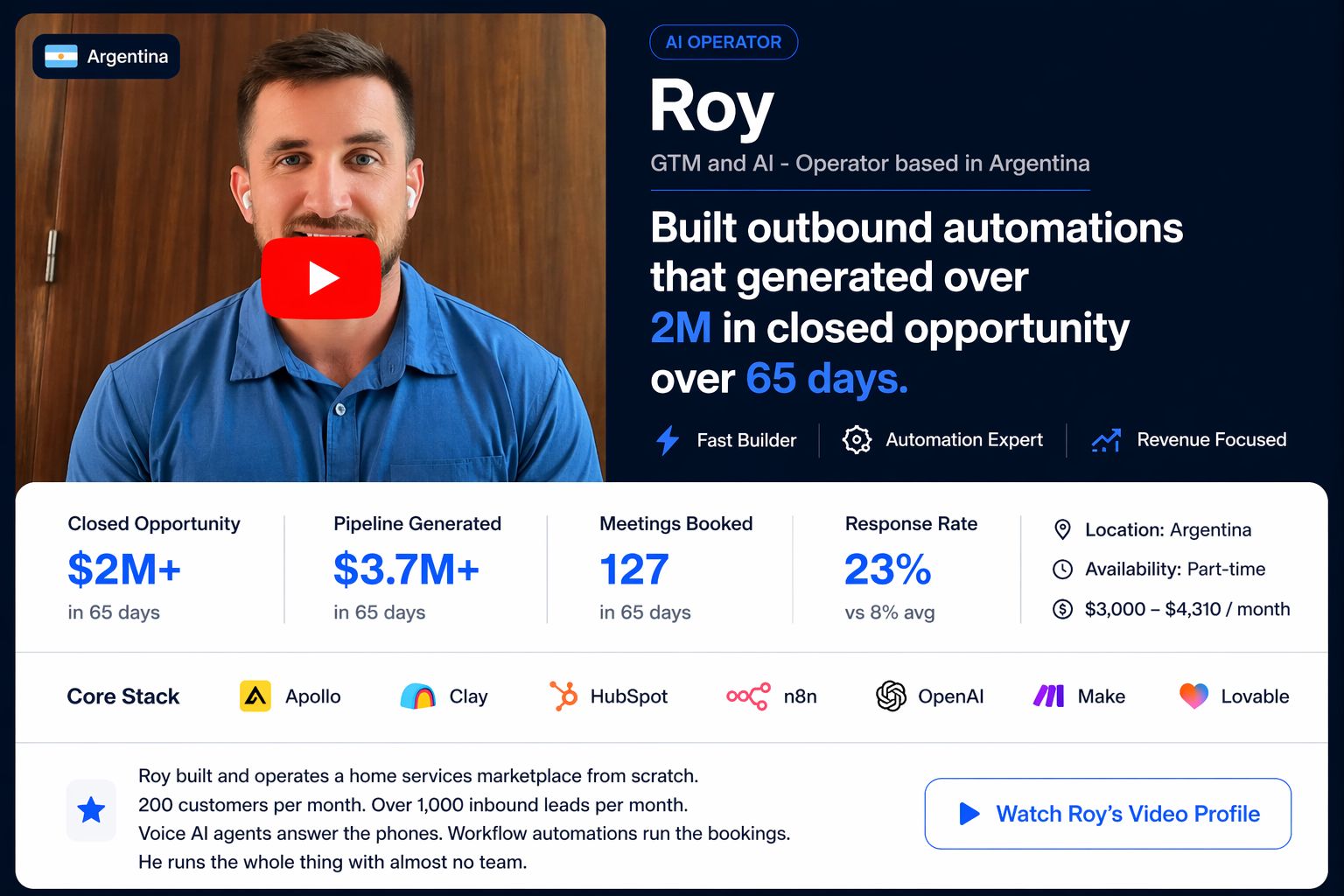
Meet Roy,
Argentina. $3,000 to $4,310 per month.
Roy is not applying to your role with a resume and a hope.
Roy built and operates a home services marketplace. 200 customers a month. Over a thousand inbound leads a month. Voice AI agents answer the phones. Workflow automations run the bookings.
He runs the whole thing with almost no team.
He has already built what most companies are still trying to hire someone to figure out.
That is the difference between a title and an operator. Receipts.

How we help
CloudTask runs the matching process so you do not guess.
We use 10 years of placement data to answer three questions before you interview anyone.
What is the actual outcome you need, and which role archetype delivers it?
What does that archetype cost in the market, and what will you get at your budget?
What onboarding, scorecard, and PIP framework make this hire stay 24 months?
If your last hire did not stay, the hire was not the problem. The process was.

See you Monday.
Amir Reiter, CEO, CloudTask
|


Most AI advertising tools remove people.
That is exactly why they fail.
The companies actually scaling paid acquisition are not replacing operators.
They are upgrading them.
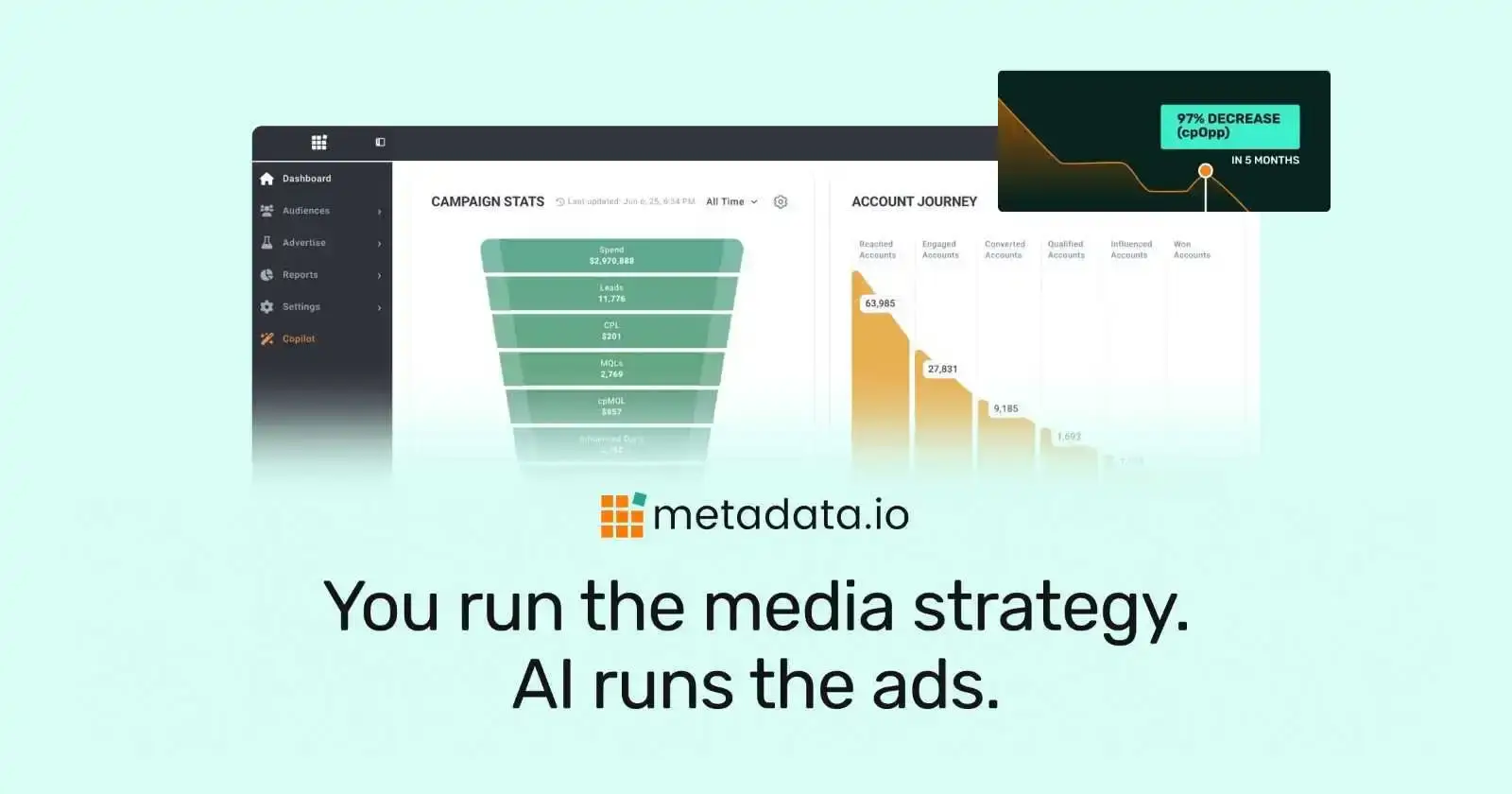
metadata.io is not another automation layer.
It is a system that turns media buyers into AI operators.
Campaign execution, targeting, testing, optimization.
Handled through agents. Directed by humans who know what they are doing.
We see this shift every week.
Teams that combine AI systems with real operators outperform both sides alone.